Meme coin. No utility. No roadmap. No promises. Not financial advice. Not affiliated with Keith Gill or GameStop Corp.
The kitten in Roaring Kitty's profile picture. It has a name.
A village cat from the Czech Republic that became the face of the biggest trade in retail history — and now pays its holders in GameStop.
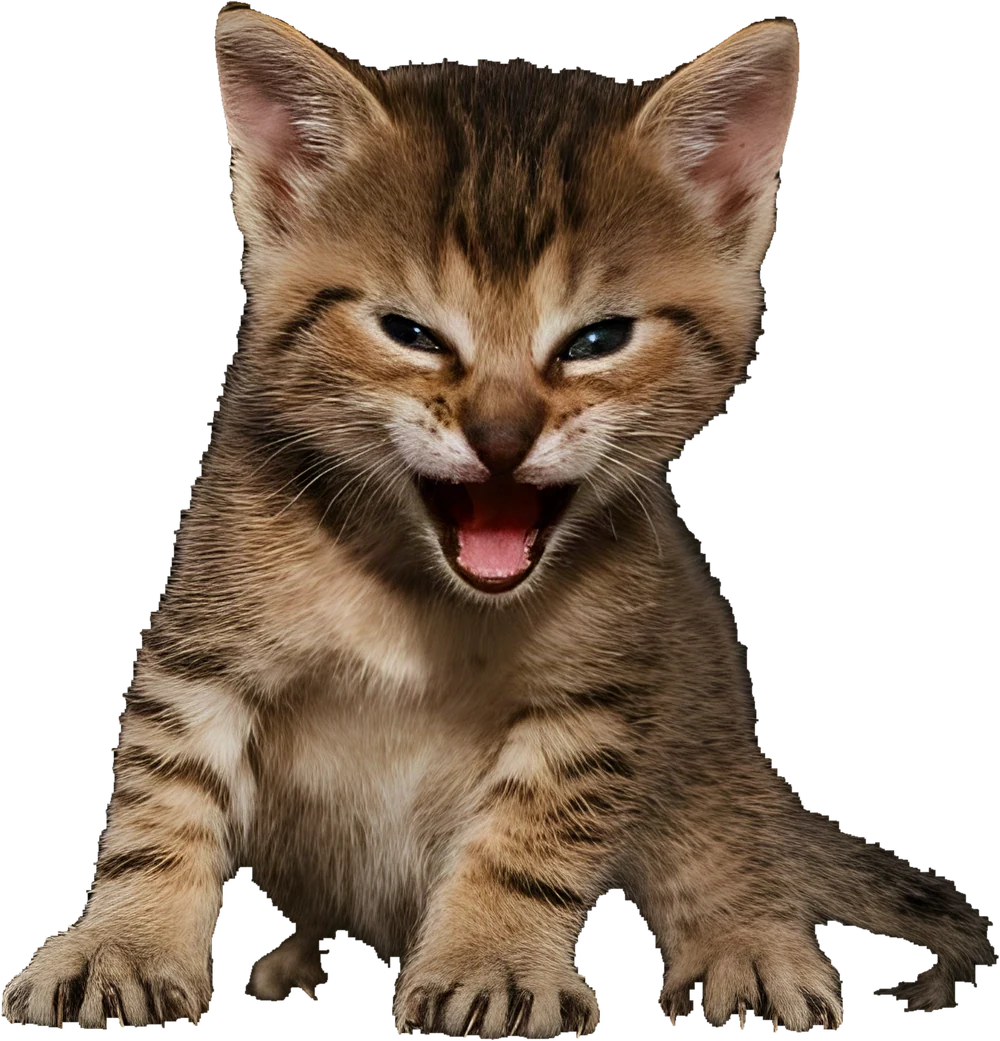
Photo: Jiří Kasal, 2008, Czech Republic · source
How a village kitten became the face of the memestock movement.
In a Czech village, photographer Jiří Kasal shoots a local kitten mid-roar. The neighbours call it Tygr — Czech for tiger.
The photo ends up on stock sites. A guy in Massachusetts picks it for his profile picture and calls himself Roaring Kitty.
GameStop hits $483. Congress calls him in. Millions of people stare at this cat every day and not one of them knows its name.
A deep dive finally traces the photo home. The photographer still remembers the cat. It had a name the whole time.
The most famous cat in finance finally gets one of its own — paired to the stock it accidentally became the face of.
It lived a village lifestyle — it walked around the area wherever it wanted.
One mechanic. Three boxes. No homework.
Buy or sell $TYGR and 3% gets taken. Not a number we made up — it is baked into the token.
That fee is collected in GME, the tokenised GameStop share TYGR trades against. Real ticker, not a coupon.
No staking. No locking. No farming. No claiming. You hold the cat, the cat hands you GameStop.
Four steps. None of them are hard.
Send over some SOL. An amount that will not ruin your week.
That is the whole job. The GME shows up on its own. He never sold either.